
Smart Technology in Urban Farming: The Future of Food Production
 Shivam Nalawade,
2 years ago
6 min read
Shivam Nalawade,
2 years ago
6 min read
Introduction:
As the worldwide inhabitants grows and cities turn into extra crowded, how will we guarantee sufficient meals for everybody? Good know-how and concrete farming are revolutionizing conventional farming strategies, providing a glimpse into the way forward for meals manufacturing. However can these improvements remodel how we produce meals and maintain our cities in the long term?
The Function of Good Know-how in City Farming
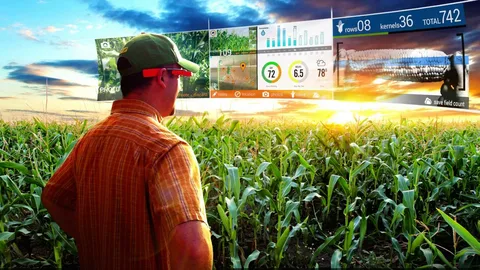
The appearance of good know-how has introduced a wave of change to city farming, optimizing productiveness in ways in which had been unimaginable only a decade in the past. City agriculture, as soon as restricted to small backyard plots and rooftop areas, is now leveraging improvements just like the Web of Issues (IoT), synthetic intelligence (AI), and automation to considerably enhance yield.
You may additionally like: Revolutionizing Agriculture: How AI is Shaping the Future of Farming
IoT and Good Sensors
IoT know-how performs a essential function in monitoring environmental situations in city farming methods. Good sensors can monitor components like soil moisture, mild ranges, and air high quality in actual time, offering farmers with exact information to make knowledgeable choices. For instance, the Farmbot system, an open-source farming robotic, makes use of sensors to automate watering, planting, and monitoring, permitting small-scale city farms to function with excessive effectivity.
By 2028, the worldwide good agriculture market is projected to develop to $25.4 billion, fueled by the rising use of IoT and superior good farming applied sciences.
Vertical Farming and Good Irrigation
As city areas turn into more and more congested, vertical farming has gained significance as an progressive answer to maximise agricultural output inside smaller areas. Vertical farms, the place crops are stacked in layers, permit for extra manufacturing per sq. foot in comparison with conventional strategies. Integrating good applied sciences resembling LED develop lights, hydroponics, and automatic irrigation methods may help keep optimum situations for plant development.
One instance is AeroFarms, a pioneer in vertical farming know-how, which makes use of aeroponics to develop crops with 95% much less water than conventional farming strategies. This mix of good irrigation and vertical farming permits for resource-efficient meals manufacturing in city settings.
Automated Greenhouses
Automation in city farming doesn’t cease on the crop stage. Automated greenhouses, like these developed by Freight Farms, are revolutionizing how cities method meals manufacturing. These good greenhouses use local weather management methods, automated watering, and lighting to create optimum rising situations, whatever the exterior atmosphere.
Automation allows city farmers to supply meals year-round, regardless of climate situations, guaranteeing a constant meals provide for metropolis populations. With the additional benefit of utilizing good applied sciences to scale back water and vitality consumption, automated greenhouses are set to turn into integral to the way forward for meals manufacturing.
The Way forward for Meals Manufacturing in City Settings
City farming pushed by good know-how shouldn’t be solely about rising meals extra effectively; it’s about assembly the rising calls for of city populations. Cities are anticipated to deal with 68% of the world’s inhabitants by 2050, and conventional meals manufacturing strategies merely received’t have the ability to hold tempo.
By using good applied sciences resembling IoT, and automation, city farms can produce meals domestically, lowering the necessity for lengthy transportation routes, minimizing meals waste, and slicing down carbon emissions. In response to the United Nations, practically one-third of all meals produced worldwide is wasted throughout transport. City farming drastically reduces this inefficiency by producing meals nearer to the place it’s consumed.
Furthermore, the adoption of precision farming methods in city areas permits for resource-efficient manufacturing, conserving water, vitality, and fertilizers. The World Financial Discussion board estimates that precision agriculture might cut back water use by as much as 50% in farming.
Good Know-how’s Influence on Sustainability
Sustainability is on the coronary heart of contemporary city farming efforts, and good know-how is making it attainable to develop extra meals with fewer sources. Along with lowering water and vitality utilization, good farming methods may help lower down on the usage of artificial fertilizers and pesticides, which frequently contribute to soil and water air pollution.
For example, hydroponic methods, which have gotten extra extensively adopted in city farming, can cut back water utilization by as a lot as 90% in comparison with typical soil-based farming strategies. That is significantly essential in water-scarce areas, the place city agriculture may help safe meals provides with out overtaxing pure sources.
Challenges and Alternatives
Whereas the potential for good know-how to revolutionize city farming is immense, there are nonetheless challenges to beat. One of many essential hurdles is the preliminary funding value of establishing good city farms. Vertical farming methods and automatic greenhouses may be pricey, requiring substantial capital for infrastructure, know-how, and upkeep.
Nevertheless, as these applied sciences turn into extra extensively adopted, prices are anticipated to lower. Moreover, partnerships between personal corporations and metropolis governments might pave the best way for extra reasonably priced city farming options. Governments can incentivize good farming applied sciences by providing subsidies and grants to city farmers, serving to offset the price of implementation.
Conclusion
The combination of good know-how into city farming holds the promise of a extra sustainable and environment friendly way forward for meals manufacturing. As cities develop, these improvements are essential for feeding city populations whereas minimizing environmental influence. By embracing good sensors, AI, automated methods, and precision farming methods, city farms can play a major function in fixing a number of the most urgent meals safety challenges.
The way forward for meals manufacturing is undoubtedly tied to good know-how, and as these improvements evolve, they may proceed to remodel city landscapes, bringing meals manufacturing nearer to shoppers and selling sustainability within the course of.
FAQs:
1. What’s city farming?
City farming includes the cultivation, processing, and distribution of meals inside metropolis environments or surrounding city areas. It may well embrace methods like vertical farming, rooftop gardening, and hydroponics.
2. How does good know-how profit city farming?
Good know-how, resembling IoT, AI, and automation, improves effectivity by offering real-time information, optimizing useful resource use, and automating farming processes.
3. Is vertical farming sustainable?
Sure, vertical farming is sustainable because it makes use of much less land, water, and vitality in comparison with conventional farming, making it ultimate for city environments.
4. What challenges does good city farming face?
The primary challenges embrace excessive preliminary prices, infrastructure necessities, and upkeep. Nevertheless, prices are anticipated to lower as know-how turns into extra extensively adopted.
By incorporating good know-how, city farming is changing into a scalable answer to feed the rising world inhabitants whereas guaranteeing sustainability and effectivity.
Featured Picture Supply: Yandex


